Taylor Powell · 28 September 2026
Strategies for Implementing Secure Note Collaboration in Multi-Regional SaaS Deployments
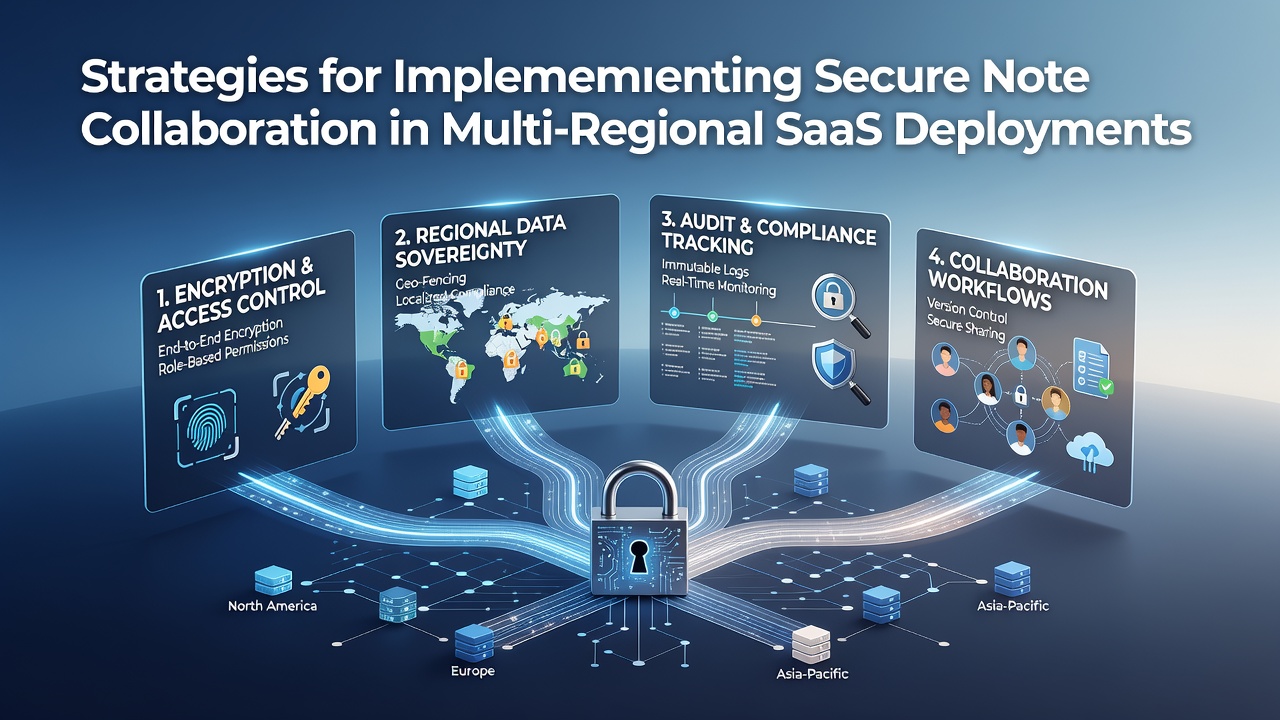
Multi-regional SaaS deployments require careful planning when teams share notes across borders because data sovereignty rules vary by jurisdiction and security protocols must adapt to local infrastructure constraints. Researchers at various institutions have documented how organizations manage these complexities through layered encryption methods combined with granular permission systems that enforce access based on geographic and role-specific criteria.
One approach involves deploying end-to-end encryption that operates independently of the underlying cloud provider while maintaining synchronization speeds suitable for real-time editing sessions. Data residency controls further support compliance by routing note storage to facilities within designated regions and this setup reduces latency for local users without compromising the overall architecture.
Core Technical Foundations
Encryption standards such as AES-256 combined with TLS 1.3 form the baseline for protecting note content during transmission and at rest according to guidelines from the National Institute of Standards and Technology. Organizations often integrate these with key management services that rotate credentials automatically and log every access attempt across distributed nodes.
Zero-trust architectures extend this protection by requiring continuous verification for each collaboration action rather than relying on initial authentication alone. Teams configure micro-segmentation to isolate note databases by region so that a breach in one area does not cascade to others and this method has gained traction following multiple industry reports on cross-border incidents.
Regulatory Alignment Across Regions
Compliance frameworks differ significantly between the European Union's data protection directives and North American standards yet unified policies can address both through mapped controls. In September 2026 updated reporting requirements from several oversight bodies are expected to emphasize audit trails for shared notes which will push SaaS providers to enhance logging granularity.
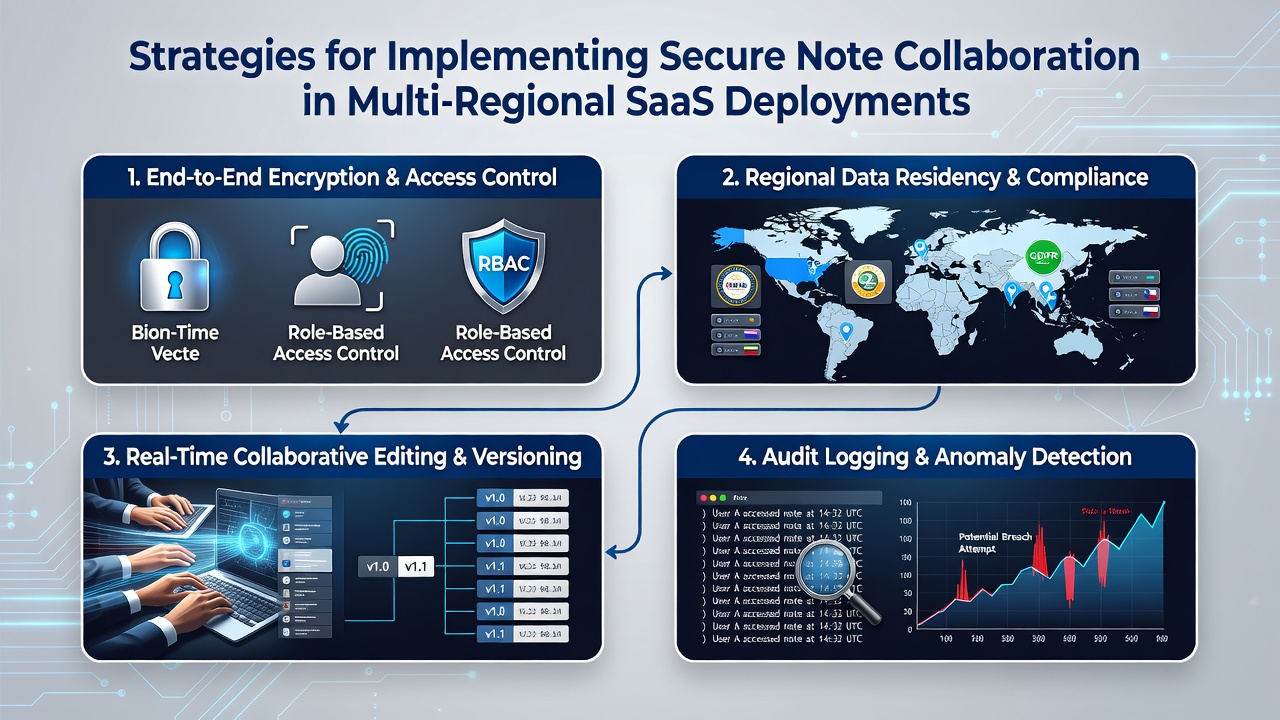
ENISA documentation highlights how organizations in Europe implement data localization alongside encryption to meet these demands while similar principles appear in Canadian privacy legislation. Companies map their note collaboration features to these rules by maintaining separate tenant instances per major region and synchronizing only metadata where permitted.
Implementation Workflow
Deployment begins with an inventory of all note types and their sensitivity levels followed by selection of collaboration platforms that support federated identity management. Engineers then configure role-based access lists that reference both user attributes and location data to prevent unauthorized cross-region sharing.
Testing phases include simulated regional outages to verify failover mechanisms while maintaining encryption integrity throughout. Continuous monitoring tools track anomaly patterns such as unusual edit volumes from specific time zones and these feeds integrate with existing security information systems for rapid response.
Operational Best Practices
Regular training programs educate staff on secure note handling procedures tailored to their regional context and this reduces human error vectors that technical controls alone cannot eliminate. Version control features within the collaboration tools allow rollback of compromised notes without affecting parallel regional copies.
Integration with broader SaaS ecosystems occurs through APIs that enforce the same security policies applied to the core note system. Observers note that successful deployments often feature automated policy updates pushed from a central governance layer to regional edges ensuring consistency without manual intervention at each site.
Conclusion
Effective strategies for secure note collaboration in multi-regional SaaS environments combine encryption, access controls, and regulatory mapping into a cohesive system that scales with organizational growth. These methods draw from established frameworks while adapting to evolving requirements across jurisdictions and they enable teams to maintain productivity alongside data protection standards.